


Cultist Simulator
Playdigious
I approached Cultist Simulator expecting a card game with a clear route to victory, but Playdigious’ mobile adaptation quickly showed me that it wants something very different. It is a dark, experimental game about pursuing forbidden knowledge, managing fragile opportunities, and learning from failure. The cards are not simply a hand of attacks, defenses, or resources. They represent ideas, actions, influences, and consequences that I had to interpret over time.
That makes it unusually absorbing, but also unusually demanding. I was rarely told what to do next. Instead, I had to watch how cards interacted, remember what had happened before, and decide whether a promising discovery was worth the risk. The appeal comes from gradually understanding the rules behind the mystery. If you want a relaxing card game that explains its objectives clearly, this is probably the wrong choice. If you enjoy experimentation and the satisfaction of solving a system with very little hand-holding, it offers an experience that feels genuinely distinctive.
Learning what the cards are really asking you to do
The first sessions are less about winning than about forming questions. I began with ordinary-looking actions and slowly noticed that the game’s cards could change meaning depending on where I placed them and what I combined with them. That structure gave me an early goal without putting a large mission marker on the screen: understand enough of the world to make a deliberate decision rather than clicking blindly.
This is where the game’s premise becomes mechanically important. Its atmosphere is not just decoration around a conventional deck. The uncertainty is part of the challenge. I had to treat each action as an experiment, observe the result, and decide what information was worth keeping in mind. A failed attempt could still teach me something useful, especially when it revealed a dangerous interaction or showed that I had misunderstood a resource.
My most useful early habit was to avoid spending every available option immediately. When several cards appeared possible, I first considered which action would give me information and which would merely consume time or create a problem. That small change made the opening less chaotic. I stopped asking, “What can I play right now?” and started asking, “What do I need to learn before I commit?”
Related News






The game also benefits from short, focused sessions. I found it easier to remember the meaning of a recent result when I played for a while, paused, and returned with a clear intention. Trying to explore every possibility in one sitting made the board feel more confusing than it really was. The mobile format suits this approach because I could make a few careful moves during a quiet break rather than needing a long uninterrupted evening.
There is a real barrier here for newcomers. The opening does not provide the kind of friendly tutorial that many modern card games use to explain every term and objective. I occasionally felt that I was losing because I lacked vocabulary rather than because I had made a clever opponent outplay me. That friction is intentional, but intention does not make it painless. Players who dislike reading between the lines may abandon the game before its deeper structure becomes visible.
Progress is measured in understanding as much as in unlocks
One of the strongest parts of the design is the way progress can feel meaningful even when a run ends badly. I did not always gain a visible reward, yet I often came away with a better idea of what to try next. A failed attempt could reveal a relationship between cards, expose a timing problem, or show me that an apparently helpful choice carried a hidden cost.
Gallery
That creates two kinds of progression. There is the progress within a particular attempt, where I try to build momentum and keep my situation stable. Then there is the progress in my own knowledge, where I begin to recognize patterns that were previously obscure. The second kind is essential. Without it, repeated failure would feel like repetition. With it, restarting can feel like applying a newly discovered piece of the puzzle.
I recommend keeping a few personal notes, especially during the first several hours. I did not need to record everything, but writing down what a card seemed to influence and what caused a setback saved me from repeating the same mistake. This is not a sign that the design is broken; it is a practical response to a game that expects the player to build a mental model. The notes also made later decisions feel more intentional instead of relying on vague memory.
Another useful approach is to separate discovery from ambition. When I tried to chase the most dramatic possibility before understanding the basic loop, I created unnecessary complications. When I focused on one question at a time, the game’s systems became easier to read. For example, I could spend a session testing how a particular type of card behaved rather than trying to force a complete plan from the beginning.
The result is a progression system that rewards attention more than reflexes. There is no need to make rapid decisions, and the game does not become interesting because the cards move faster. Its satisfaction comes from noticing that a choice I once considered random now has a reason behind it. That is a strong fit for patient players, but it also means that someone looking for constant rewards may find the pace unrewarding.
Why the challenge rises through uncertainty rather than speed
The difficulty curve feels unusual because the game does not simply add stronger enemies or more complicated opponents. Instead, it gradually asks me to manage more consequences while still interpreting what those consequences mean. Early confusion comes from not knowing the rules. Later difficulty comes from knowing enough to form a plan, then having to protect that plan from interruptions, bad timing, or limited opportunities.
That shift kept the game engaging for me. At first, I was experimenting because I had no alternative. Later, I was experimenting because I understood that certainty was impossible and wanted to improve my odds. The difference matters. A game that remains mysterious without giving the player tools to improve can feel arbitrary. Here, my growing knowledge made difficult situations feel more manageable, even when they were still dangerous.
Failure is central to this curve. I had to accept that some attempts would end before I reached the outcome I wanted. The important question was whether the failure taught me enough to justify the time spent. Usually it did, provided I had been paying attention. If I played carelessly, however, the result felt much harsher because I could not explain exactly why things had gone wrong.
For that reason, I would not recommend playing while distracted. This is not an ideal companion game for watching a show or answering messages. A single overlooked card or missed change in the situation can alter the entire direction of an attempt. The controls are not the main challenge; the challenge is maintaining a clear picture of what is happening and why.
The game’s Teen content rating also matches its tone. Its world is built around unsettling themes, obsession, and dangerous curiosity rather than cheerful fantasy adventure. I appreciated that the atmosphere supports the mechanics, but players seeking a lighthearted card experience should know that the mood is deliberately somber. The writing and presentation ask me to take the strange setting seriously, even when I am still trying to understand its rules.
There is also a practical learning curve around the interface. On a phone, cards and information can feel dense, particularly when several elements are active at once. I became more comfortable after slowing down and checking each area carefully, but the experience was easier on a larger screen than on a very small handset. This is not a reason to avoid the mobile version, though it is worth considering if you prefer compact displays or have difficulty reading small text.
What keeps a run interesting after the first discoveries
The strongest retention pressure comes from unfinished questions. I often stopped playing because I was tired, then returned later because I wanted to test one specific idea. That is a better kind of pull than a constant stream of rewards. The game made me curious about what a different combination, timing choice, or direction might reveal.
At the same time, the design can create a less enjoyable kind of pressure when I did not understand what I was supposed to preserve. A run could become unstable before I realized which part of my setup needed attention. That made some sessions feel less like a strategic challenge and more like damage control. The distinction depends heavily on how much I had already learned.
My best routine was to begin each session with a small objective. I might try to understand one unfamiliar card, stabilize a recurring problem, or pursue a single line of discovery. This prevented the game from turning into unfocused trial and error. It also made the pacing feel more generous because every session produced a clearer takeaway, even when the larger goal remained distant.
The game is particularly well suited to players who enjoy discussing discoveries with friends, but it does not require that kind of outside help. I liked forming my own theories first. If I looked for a complete solution too early, I would have removed much of the pleasure from the process. On the other hand, a small hint can be useful when I had spent too long repeating a mistake without learning anything new.
That balance explains why the game has more staying power than a typical quick card title. Many mobile card games rely on short matches, collectible expansion, or a steady ladder of rewards. This one asks me to return because I have not fully understood the world yet. It is less immediately accessible than those alternatives, but it can feel more personal once the discoveries begin to connect.
It is also important to distinguish this experience from a conventional deck-building game. I did not approach it as a contest where the best strategy is obvious after learning a few strong combinations. The pleasure is closer to investigating a strange machine. I wanted to know what each part did, what could go wrong, and whether a risky experiment might open a new path. Players who prefer direct tactical battles may find the lack of a clear opponent frustrating.
Who will appreciate it, and who should choose something else
I would recommend this game to someone who likes atmospheric fiction, obscure rules, and the feeling of solving a mystery through repeated attempts. It is especially suitable for a player who does not mind reading carefully, taking notes, and accepting that the first few sessions may be confusing. The card format makes its systems manageable one decision at a time, but the overall experience is far more involved than a casual game of cards.
I would not recommend it to someone who wants a fast match during a short commute with immediate feedback. It can be played in brief sessions, but its ideas are easier to follow when I have enough attention to remember what I was testing. It is also a poor fit for anyone who dislikes losing progress or wants every failure to feel clearly fair at the moment it happens.
Compared with familiar solitaire-style card games, it offers more atmosphere and discovery but less instant relaxation. Compared with competitive card games, it removes the pressure of facing another player while replacing it with uncertainty about the system itself. Compared with story-driven adventure games, it gives me more freedom to experiment but less conventional guidance. Those trade-offs are exactly why it feels distinctive, yet they also define its audience quite narrowly.
The mobile release is from Playdigious, and I found the format most appealing when I treated it as a thoughtful single-player game rather than a disposable phone diversion. It is available for $6.99, with optional in-app items listed from $1.99 to $6.99 each. For me, the purchase makes more sense if I already enjoy slow-burn card systems and unusual narrative design. Someone uncertain about that style may want to watch a little gameplay before committing.
The game is suitable for Teen players and requires Android 5.1 or later. Its current version is 3.9, and the listing shows over 100 thousand installs, alongside a 4.6 average from around 16 thousand ratings and about 2.3 thousand written reviews. Those figures suggest a strong reception among its audience, but they should not be mistaken for proof that the unusual learning curve will suit everyone.
My verdict on the long-term progression
After spending time with it, I think its goals, unlocks, and discoveries sustain play because they are tied to curiosity rather than a simple reward schedule. I kept returning when I had a theory to test or a previous failure to reinterpret. The pacing is deliberate, and the game becomes more satisfying as I replace guesswork with informed experimentation.
Its biggest weakness is also its identity. The lack of clear direction can make the opening feel opaque, and some failures may seem punishing before I understand the forces behind them. The interface demands concentration, the tone is not light, and the experience does not offer the instant clarity of a traditional card battler. These are meaningful limitations, not minor inconveniences.
Still, I found the progression unusually memorable. The most rewarding moments were not simply reaching a new stage, but realizing that I finally understood why an earlier attempt had collapsed. That kind of progress feels earned because it comes from observation and better judgment. The game trusts me to become more capable rather than constantly explaining what I should feel.
My recommendation is simple: choose it for investigation, not convenience. If you want a card game that lets you experiment, fail, take notes, and slowly uncover its logic, this is one of the more distinctive options on mobile. If you want quick victories, transparent objectives, or a relaxed filler game, a conventional solitaire or competitive card title will serve you better. For patient players willing to meet it on its own terms, the strange pacing becomes the reason to keep coming back.
FAQs for Cultist Simulator
What is Cultist Simulator about?
Cultist Simulator is a narrative-driven card game about forbidden knowledge, secret societies, and supernatural ambition. You build a life by combining cards representing actions, people, locations, influences, and lore. The game has no traditional tutorial-heavy structure, so much of the experience comes from experimenting, interpreting clues, and discovering how its systems connect. Expect a mysterious, text-focused adventure rather than a conventional role-playing game.
Is Cultist Simulator difficult for new players?
Yes, Cultist Simulator can be challenging, especially during the first few hours. The game explains its mechanics indirectly, and early mistakes may lead to illness, poverty, imprisonment, madness, or death. However, failure is part of the intended design, and each attempt teaches you more about the world. Players who enjoy experimentation, reading, and solving systems without constant guidance will likely appreciate its difficulty.
Does Cultist Simulator require an internet connection?
Cultist Simulator is primarily a single-player experience and can generally be played offline after installation. Its core gameplay does not depend on online multiplayer, live events, or constant server access. You may still need an internet connection to download the app, install updates, restore purchases, or use platform-related services. Availability of offline functionality can vary slightly depending on your device and operating system.
Are there in-app purchases or additional expansions?
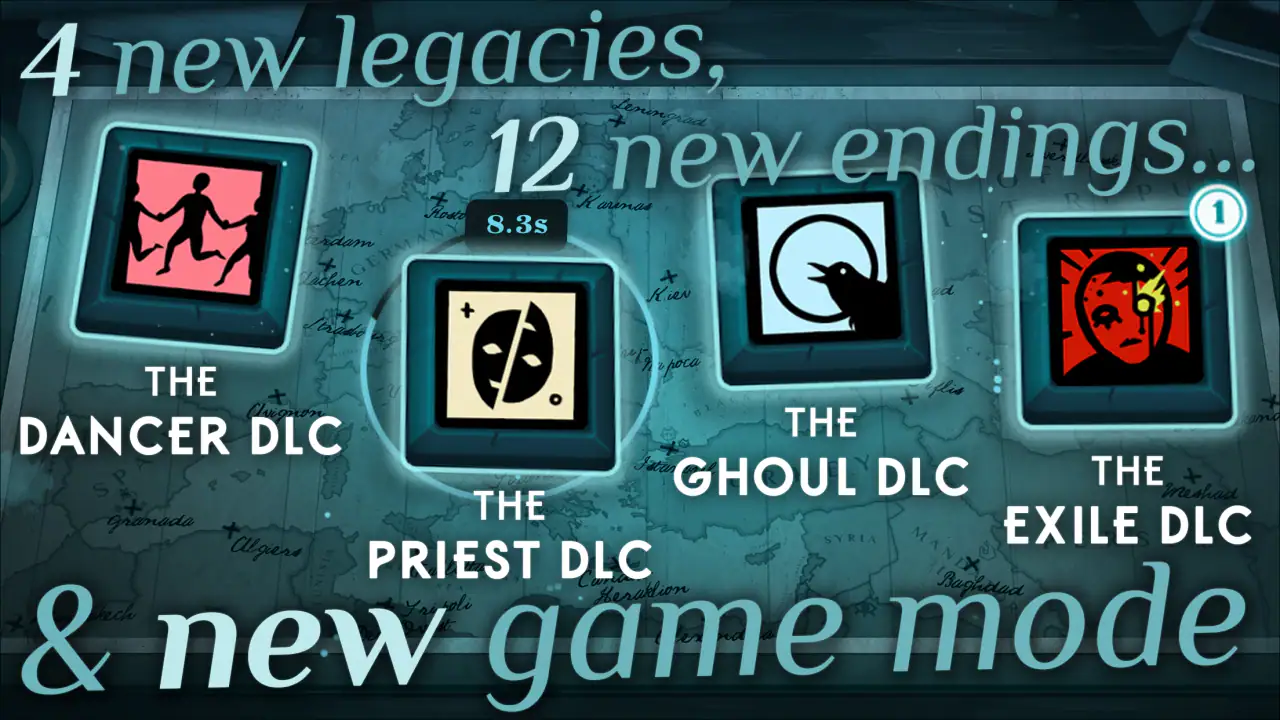
The base game may be offered as a paid title or through a version that includes optional downloadable content, depending on the Android or iOS store listing and region. Expansions can add new characters, storylines, mechanics, and endings, but they are not required to understand the main game. Before downloading, check the current store page carefully to see whether the edition includes extra content or separate purchases.
Is Cultist Simulator suitable for all ages?
Cultist Simulator is aimed primarily at mature players because it contains dark themes involving occult rituals, death, addiction, mental illness, manipulation, imprisonment, and disturbing supernatural ideas. Much of this material is presented through written descriptions rather than graphic visuals, but the atmosphere can still be unsettling. Parents should review the platform’s age rating and consider whether the game’s themes are appropriate for younger players.
Pros
- Deep
- atmospheric storytelling with rich occult lore.
- Highly replayable thanks to varied cults
- endings
- and strategies.
- Unique card-based mechanics reward experimentation and discovery.
- Excellent writing creates a mysterious
- unsettling mood.
- Works well offline and does not require constant internet access.
Cons
- The interface can feel cramped
- especially on smaller phone screens.
- Early failures may seem confusing before the game’s systems become clear.
- Progress often depends on trial and error rather than clear guidance.
- Some sessions become repetitive when managing recurring cards and timers.
- The dark theme and small text may be difficult for some players to read.


